
20/11/2025 0 Comments
And us
And us
# Reflecting on the Scriptures
And us
Our readings this week are: Jeremiah 23.1–6 and Luke 23.33–43.
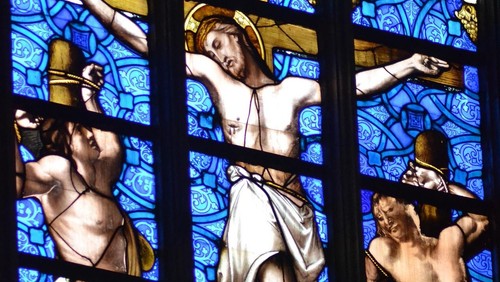
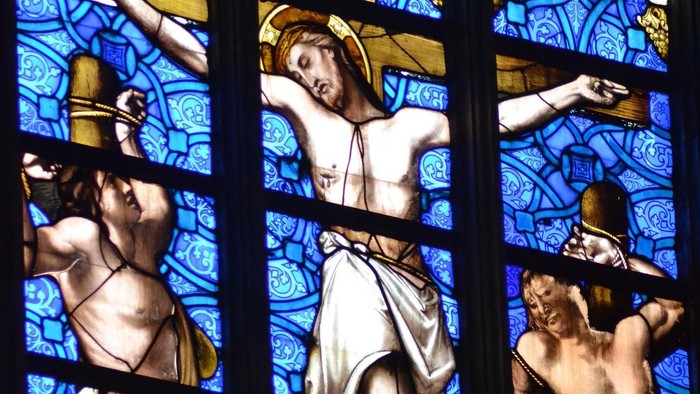
"Are you not the Messiah? Save yourself and us!’" are the final words we find on the lips of a condemned criminal, hanging on a cross next to Christ, in this week's gospel reading.
To me they are extraordinary words. They build on the taunts of the crowd ('He saved others; let him save himself if he is the Messiah of God, his chosen one!’, ‘If you are the King of the Jews, save yourself!’); they echo those other taunts almost perfectly - but not quite. There are two pesky little words stuck on the end: 'And us.'
For me they change this line. It's no longer a simple insult, and suddenly carries within the broader dismissal a last-minute, last ditch, grasping-at-straws sort of desperate hope. I may be out on a limb here, but might the thought process behind these words be something like: 'You are definitely the Messiah (how dare you claim to be!) If you were you could save yourself just like that! But you're in the muck just as much as we are... what's the worth of all your grand claims now? But... just in case... if you do happen to be able to save yourself... could you give us a hand too?'
Even if they begin in a place of rejection of Christ, and rebellion against him, are this criminal's final words not him talking to Jesus and asking him to save him? Something that over the years many, many people have been encouraged to do - often starting from a very similar point of rejection and rebellion.
And can you think of a single example from the gospels in which someone asks Jesus to save them, and he doesn't? When the storm swells up, Jesus disciples wake him from his sleep in the boat and ask him to save them. And he does. When a woman has been bleeding for twelve years, she secretly reaches out to touch Jesus' cloak that he might save her. And he does. When Peter jumps out of the boat full of faith, and then suddenly realises the impossibility of walking on water and starts to sink, he cries out to Jesus that he might save him. And he does. When Jairus' daughter is lying at home dying, he seeks out Jesus and asks him to come and save her. And he does...
Is there a single example where Jesus doesn't offer salvation when it's asked of him?
Turns out there is. But only one. And it's right here. When this criminal asks Jesus to save him ('and us!') he doesn't even get a 'no'. He 'prayed the prayer', and gets no answer at all. So what gives?
Is it simply insincerity? Am I just wrong that there is any element of hope here? Luke does, after all, specifically signposts his words as 'deriding' or 'blaspheming' Jesus.
One of the reasons, of course, that this criminal is never answered is because another interrupts the conversation, "‘Do you not fear God, since you are under the same sentence of condemnation? And we indeed have been condemned justly, for we are getting what we deserve for our deeds, but this man has done nothing wrong... Jesus, remember me when you come into your kingdom."
A very different prayer; looking it seems for something far less. Not for escape. Not for a miracle. Not even to be saved. Simply to be remembered.
And yet, this prayer gets answered beyond the petitioner's wildest expectations, '‘Truly I tell you, today you will be with me in Paradise.’'
The difference is subtle, but powerful. The first criminal looks to his own salvation, and sees in Jesus a route that might just get him off the hook (so speak); he's looking for what he can get out of this failed 'Messiah'; and if the answer is nothing then he's got a thick veil of scorn behind which to hide. And it is that with which he is left.
The second look to Jesus' salvation and sees in the midst of the suffering that he shares with him, in an innocent man hanging in a place the world calls cursed, a kingdom of solidarity, forgiveness, and reconciliation. It is, he knows, a kingdom to which he can never hope to ascend, but into which he longs to offer himself. And it is that which he gains.
The kingship of Jesus, you see, isn't one of this world. It isn't to do with strength. It doesn't seek to serve itself, or hoard its riches. It doesn't come with quick fixes, and a life of ease. At no point does it offer any guarantee of earthly health, wealth, or prosperity. It is there, instead, in the midst of shared pain - a beautiful point of innocence that calls for forgiveness over the sins of the world; words of reconciliation to the condemned; and welcome to those who can lift their gaze beyond themselves.
As we stand again at the foot of the cross this week; as we gaze upon the paradox of authority in submission; power in suffering; and life through death; as we bring ourselves into the presence of The King, what desires will you be carrying in your heart, and which words will be upon your lips?

Comments