
29/01/2026 0 Comments
What name have you given this child?
What name have you given this child?
# Reflecting on the Scriptures
What name have you given this child?
Our readings this week are Malachi 3.1–5 and Luke 2.22–40.
As I mentioned above, this Sunday we are celebrating Candlemas, and bringing Christmas to a close. It's a feast that revisits the baby Jesus, as he is brought by his parents to be presented in the Temple of Jerusalem.
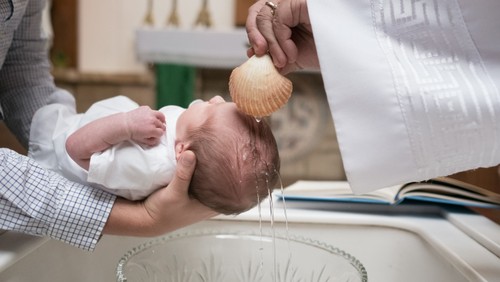
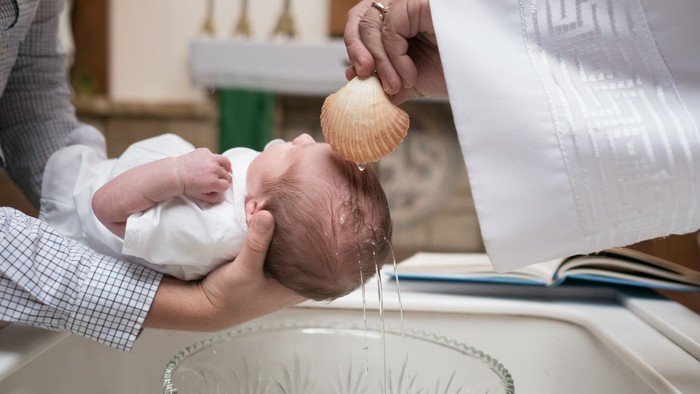
Offering a sacrifice in exchange for a firstborn is not something we tend to do anymore, but there is still a strong instinct - even amongst those who don't regularly attend church - to bring infants into the presence of God, and acknowledge the gift of their arrival. These days that's expressed in either a service of thanksgiving for the birth of a child, or through a service of baptism.
At the centre of the service of baptism there is a recognition of the outpouring of the unconditional love of God on an individual, a named individual. The grace, favour, and Spirit of God are being sought not generally, but specifically, individually, for this particular, wonderful, person. That's why I still ask, though it is not officially a part of the liturgy, 'What name have you given this child?' - it's not just about making sure I haven't forgotten!
In a striking counterpoint to baptism, though, 'the child' in this passage from Luke - though we all know it is Jesus - is never actually named! His identity seems bound up instead in his purpose, the light he brings, and the redemption he will achieve. He seems, small as he is, to carry an identity so large that it defies naming.
The supporting cast, though? That is unusually replete with named characters; characters whose names hint at specific purposes. Perhaps not lifetime defining purposes, but certainly important ones to this particular moment in history.
For example, we don't just have 'an old man' coming out with the nunc dimittis, we have 'Simeon'. A man whose name means 'he has heard' or 'God has heard'. It is a name that reflects Simeon's capacity for listening to the Spirit, which guided him to be present at this moment, and echoes the opening emphasis on 'the word' of God in his poem. That poem then rounds out with the idea of eyes seeing salvation, broadening the senses to the full body, full-person experience that is meeting the incarnate God.
Even more striking, though, is that we meet Anna by name. She is one of only four named women prophets in scripture (I'm not counting those identified as 'false prophets' - but even that only brings the number up to 6!). Her name means 'grace' or 'favour'. It would be nice to think that that is a name descriptive of her character, and it also describes the nature of the words she ends up sharing with those who will listen.
But more interesting to me is her patronymic, 'daughter of Phanuel'. We have to acknowledge that we are dealing with a text that is very quick to define this woman in relation to the men around her (daughter of... widow of...). I don't want to excuse, or reduce that reality for Anna, her contemporaries, or many women still today. This name, though, can also offer us something more affirming. It could - and I readily admit this is a stretch - allow us to see a re-affirmation of her calling and role as a prophet.
'Phanuel', you see, means 'Face of God'. 'To go before the face of ... ' is a Biblical idiom meaning, 'to stand in front of'. You can find an example of it not so very far from these verses. Jump back to Zechariah's proclamation in chapter one and we read this:
'you, child, will be called a prophet of the Most High: for you will go before the face of the Lord to prepare his ways.'
To be a prophet is, according to this, to go before the face (to go ahead) of the Lord to prepare his ways. Isn't that exactly what we find Anna doing here? Living out her identity as a 'daughter of the face of God'? Defined not by the men around her, but by her relationship with the creator of the universe, the one who creates, sustains, and upholds her as her? An identity that grants her respect, and equality.
Which brings me to my question this week for you, and for me: how, or by whom, is it that we define ourselves - by those around us, and their expectations of us, or by our relationship with the God who loves and creates us?
And if it's the latter, how would you describe that relationship? Or, to put it another way - not to restrict us, but to free us - 'In this moment, what name is God giving this child?'

Comments