
12/03/2026 0 Comments
Who am I?
Who am I?
# Reflecting on the Scriptures
Who am I?
Our readings this week are 1 Samuel 16.1–13 and John 9.1–41.
When our children were younger, there was a game we used to play quite a lot in restless moments. It was called 'Who am I?', and it was super simple. You would think of someone famous, then say, 'Who am I?', give three clues, then ask again, 'Who am I?' and let the guessing begin.
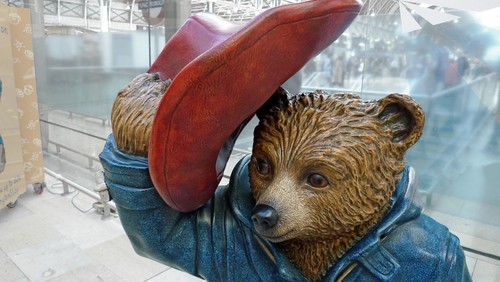
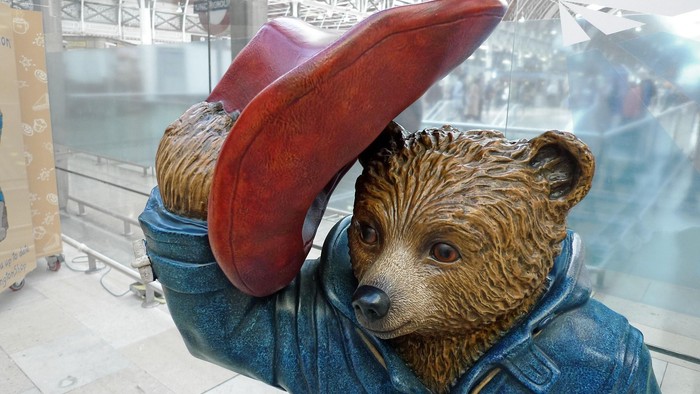
Let's play... "Who am I? I wear a duffle coat. I love marmalade. I am a bear. Who am I?"
Yes, absolutely right - I'm Paddington! Now your turn... well, maybe you can challenge me when we're next in the same place!
That question, 'Who am I?' seems to me to be tied to both our readings this week; and into the broader theme of this Sunday.
In the reading from Samuel we meet the prophet looking for the next King of Israel, that he might anoint him. He meets all the sons of a man called Jesse, having been told the king-to-be would be amongst them. When Samuel meets the first son, Eliab, he thinks he's found his man, but God tells him, ‘Do not look on his appearance or on the height of his stature, because I have rejected him; for the Lord does not see as mortals see; they look on the outward appearance, but the Lord looks on the heart.’
Having worked through all the sons, and dismissed each in turn, eventually the youngest has to be called in from the fields where he's tending the sheep. Sure enough, this one is the one God has picked - the youngest, least, and almost forgotten - a young lad called David. I think you may heard of him. Elsewhere scripture describes him as 'a man after God's own heart'.
And that, you see, was the point - not what he looked like (though we get a glowing review on that front as well), but who he fundamentally was, on the inside, in the heart, at the level God always looks, and human beings often don't.
In the gospel reading, we get a lovely example of human-looking. We meet a man whom Jesus heals by restoring his sight. And it causes utter chaos. Those around the man lose track of who he is,
'The neighbours and those who had seen him before as a beggar began to ask, ‘Is this not the man who used to sit and beg?’ Some were saying, ‘It is he.’ Others were saying, ‘No, but it is someone like him.’ He kept saying, ‘I am the man.’ But they kept asking him, ‘Then how were your eyes opened?’'
Astonishing isn't it? His identity in his neighbour's sight was so caught up in his disability, that when his sight was restored they no longer knew who he was. In fact, when it gets brought to official attention, the Pharisees have to seek out his parents to get them to confirm that this is the same man - his word wasn't good enough. The first century equivalent of your passport, driving license, and a utility bill from the last three months, I guess.
'He kept saying, ‘I am the man.' But no one would believe him. I wonder what it was that made him himself to himself.
I wonder what it is that makes you you to you? And that really is the question for this Sunday. Mothering Sunday, you see, isn't really a Sunday about mothers (sorry Mum!); it's a Sunday about identity. It was, in times gone past, a day for returning to your roots - to your mother church. That is, the church in which you had been baptised, in which you your identity as a child of God, a blessed and loved member of his family, was made manifest.
There is an old saying that comes from the desert fathers, 'No one is complete until they walk this world alone with God.' In other words, our deepest, truest, and fullest identity is found in and through our relationship with Them, and Their vision of us. That's not an identity formed from people's ideas about us, or the station we hold in society. It's not an identity that can be proved by any sort of paperwork, or external evidence. It's an identity of one heart beating inside another, far greater, and far more loving that anything we can imagine.
It's an identity that people centuries ago took time off work to recognise, and travel to celebrate, on this Sunday.
I wonder, is it a part of your answer to the question 'Who am I?'

Comments