

08/10/2026 0 Comments
Through the Tears
Through the Tears
# Reflecting on the Scriptures
Through the Tears
Our readings this week are 1 John 5:13-21 and Matthew 22.1–14.
Okay. Generally, I tend to avoid fetishes, but on this occasion, I don't think I have much choice. It's there right in front of us in Matthew: 'weeping and gnashing of teeth.'
It's an image that has fascinated Christians for millennia. It's an image that's been used to build up an ideology of judgment, of punishment - an ideology that's been used to cause fear, and weaponised for control. In my experience, even more tragically, it’s an ideology that has been internalised by people in a way that has either driven them from God instead of leading them to him, or has led them to him to cower in fear instead of dancing in love.
And so I think we do need to talk about it.
I've said in the past that if something is in Scripture, it's important, and if it's in there more than once, it's even more important. It can't be avoided: 'weeping and gnashing of teeth' is there in the Gospels seven times. But on this occasion, I'm going to slightly undermine and undercut my usual assertion, because I think it's worth noting before we go any further that six of those seven are in the Gospel of Matthew.
Before this was anyone else's fascination or fetish, it was his.
The way it appears in Matthew's Gospel does generally look like punishment - that the weeping and gnashing of teeth is a consequence of what's happening to someone - being thrown outside (hands and feet tied on occasion), or into a blazing furnace, or even being cut into pieces - all of these, perhaps not surprisingly, ending in weeping and gnashing of teeth. He has it in different flavours, and all of them, frankly, sound awful.
An interesting counterpoint, though, is the one occasion it crops up elsewhere. We find it in Luke 13:28, where Jesus says: 'There will be weeping and gnashing of teeth when you see Abraham, Isaac, and Jacob, and all the prophets in the kingdom of God, but you yourselves thrown out.'
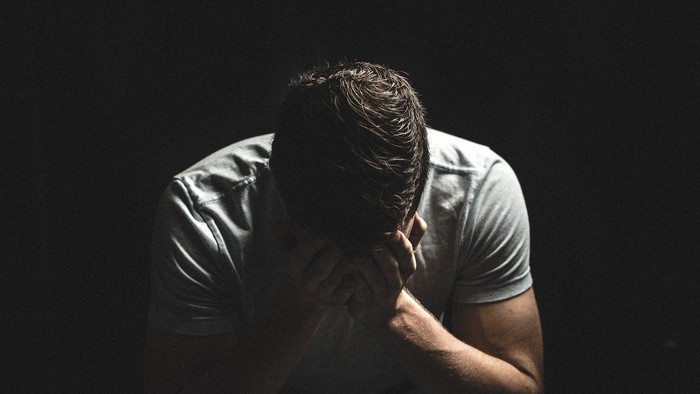
I think it's a really important counterpoint, because here in Luke, we don't find weeping and gnashing of teeth as a consequence of punishment, but as a consequence of self-realisation. When those who have made choices that have placed thems outside the kingdom of God look in, and realise what joy, what pleasure, and what love there is there - and then look around at the situation that they are in - surrounded by hypocrites and others who have rejected that love... is it any wonder that in that moment there is a realisation that they've done something incredibly stupid in rejecting the jewels and treasures of the kingdom of heaven, and find themselves racked with sorrow to the point of weeping and gnashing their teeth? Not because they’re being punished, but because they’ve messed up so badly.
And I just wonder if there is something in that image - in that image of regret, of that moment of realisation that we're not where we're meant to be - that maybe we can empathise with.
I know from my own life that there are moments when I have fallen short. When I have looked at the day and thought, 'That did not go the way it should have done.' There have been times I didn't do the things that I could have done to bring about the maximum amount of love and comfort and joy and peace for others. There are even moments when I have deliberately wronged or hurt other people.
And those moments, when I consider them, fill me with remorse, as I recognise them as moments I stood outside of the kingdom of God. And looking on what could have been and seeing what a mess I’d made instead, I have, on occasion wept.
This image, then, can become something more important than questions of eternal destiny or judgment: it can become a description of the reality of life as we live it. It becomes a way of describing the world around us - a world capable of being collectively outside of the Kingdom in a way that dwarfs any of our individual efforts. And, consequently, a world that is so replete with pain and suffering that it cannot but weep, that lives with such a deep sense of worry and anxiety it cannot help but gnash its teeth.
Then it becomes for us not something to fear in our future, but something to address in our present. And address it we can, because now we know where we are, we can see once again - through our tears - where we should be: at the feast, dressed to celebrate, welcomed by the king whose doors are open to all who will just walk in.
We discover that we are invited to bring into being, right here, right now, the kingdom of God by picking ourselves up, turning ourselves around and stepping forward once again deliberately towards the God who creates us and sustains us, revealing the person we are in him, and discovering, as the tears dry, that they are beautiful.

Comments